


A while back, a YouTuber named Jessica Stansberry swapped her faceless tech tutorials for content that actually showed her face and personality. What happened? Her affiliate commissions tripled. Not because her videos got slicker or her SEO improved—just because people started trusting her.
That shift—stepping out from behind the curtain—brings up a big question for affiliate marketers: Do you really need a personal brand to make this work?
Let’s break it down without the fluff, so you can figure out if showing up as “you” is worth it—or if you’re better off behind the scenes.
What Counts as a Personal Brand in Affiliate Land?
This isn’t about having a cute logo or being Insta-famous. A personal brand, at its core, is about trust. For affiliates, it’s the combo of:
- Your voice: How you sound in writing, video, or whatever
- Your face (optional): Whether you show up on camera
- Your values: What you promote and why
- Your rep: Do people know you and trust your takes?
You don’t need to be the next Gary Vee. Think more like Pat Flynn or Jon Dykstra—folks you trust because they’ve shown up consistently over time, not because they’re flashing Lambos on Instagram.
Why Personal Branding Packs a Punch for Affiliates
Affiliate marketing runs on trust. That’s it. People only click your links if they believe what you’re saying. A personal brand just makes that trust hit faster and harder.
Here’s what it unlocks:
- More clicks: People are more likely to follow advice from someone they recognize
- Better email results: Higher open rates, more replies
- Repeat visits: They remember you, not just your site’s name
- More options: Courses, coaching, communities—personal brands pivot better
Bottom line? Your name becomes the funnel. If they trust you, they’ll follow your links.
Do You Have to Build One? Not Always.
Now, don’t panic. Not every affiliate site needs a personal brand to win.
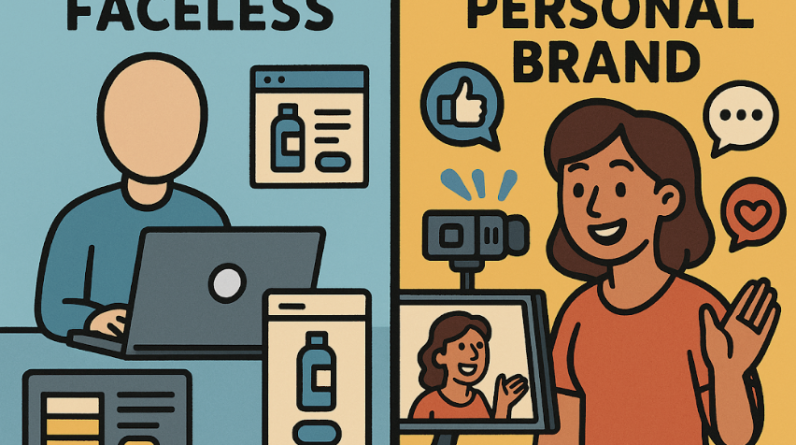
If you’re building a faceless product site (like “best smart lawn mowers”), your content might do just fine on its own. Plenty of folks are smashing it without ever showing their face.
But if your stuff leans on opinions, comparisons, or tutorials—especially anything involving YouTube, email lists, or community building—a personal brand adds serious punch.
Not keen on sharing your real name or mug? No worries. You can still build a “persona”—just keep the tone and presence consistent, even if the identity is a pen name.
How to Build a Personal Brand (Without Feeling Like a Phony)
You don’t need a full-blown branding guide. Just start showing up like a real person.
- Pick a name and stick to it
Whether it’s your actual name or a nickname, use it everywhere. Same goes for your writing voice—don’t switch between formal and casual every other post. - Choose 1–2 places to show up
Start small. Blog + YouTube. TikTok + email. Just be consistent. - Talk from experience, not just info
Instead of “Top 5 productivity tools,” say “I tested these 5 tools for a month—here’s what stuck.” That’s what people remember. - Focus on being helpful, not famous
Answer comments. Give honest reviews. Skip the fluff. - Show your face (if you’re up for it)
People connect faster when they can see who’s talking. But if that’s not your thing, a strong voice and story can carry just as well.
Affiliate Brands That Do It Right
- Miles Beckler: Real, raw, and doesn’t sugarcoat anything
- Allie Casazza: Lifestyle-driven, with subtle but smart affiliate plays
- Jon Dykstra: Doesn’t show his face much, but his tone and honesty win big trust
The takeaway? There’s no one way to do this—just be consistent and be useful.
What to Avoid When Building a Personal Brand
A few traps to dodge:
- Trying too hard: People can smell fake from a mile away
- Over-branding early: Don’t waste time on logos when your content’s still light
- Spreading yourself too thin: Pick a couple of platforms and stick to them
- Copying someone else’s style: Your edge is you—not a recycled persona
Keep it simple, and keep it real.
So… Is Personal Branding Worth It for Affiliates?
Yes— if your model depends on trust, clicks, and ongoing engagement, a personal brand can give you a serious leg up.
No— if you’re running faceless, content-heavy sites built to rank on Google and collect passive clicks, you don’t need it.
But if you’re even thinking about it? Start showing up now. Doesn’t have to be flashy. Just has to be real.
FAQs
Do I need to show my face to build a personal brand?
Nope. Your writing voice and consistency can build just as much trust.
Can I use a pen name?
Absolutely. Just keep it consistent and deliver solid content under that name.
Are some niches better for personal branding?
Yep—anything trust-based like parenting, health, or lifestyle. Product-heavy niches? Could go either way.
Should I focus on branding from day one?
Only if it feels natural. Lead with value, let the brand grow with your content.
Can I switch from a faceless site to a personal one later?
Totally. Lots of successful folks have. Just start showing up, and the brand will follow.