


You’ve built up some decent blog traffic. You’ve got a lead magnet ready to roll. You’re pumped to start growing that email list.
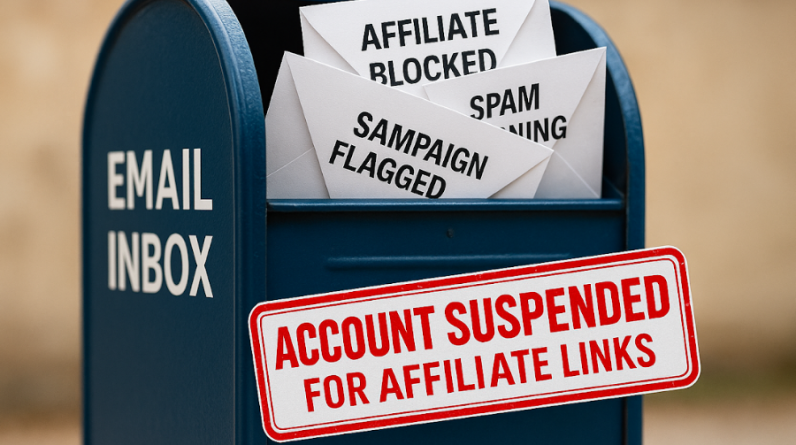
So, you pick an email platform that looks good on paper. Seems like everyone recommends it. You get it all set up, start sending emails, and… crickets. Low open rates. Weird interface. Then one day, boom—your account’s flagged because you dared to drop an affiliate link in your newsletter.
Yeah, that actually happened to affiliate marketer Doug Cunnington. One of his emails got flagged, and the platform shut things down—no warning, no discussion, no support. Just a slap on the wrist and a big headache.
The kicker? This isn’t rare. A lot of popular email platforms aren’t built with affiliate marketers in mind—and some are actively against you using affiliate links.
So if you’re in this game for the long haul, picking the right email tool matters a lot more than you might think. Let’s break down what makes an email platform affiliate-friendly, which ones play nice, and how to pick one that doesn’t quietly sabotage your hard-earned commissions.
Why Your Email Tool Isn’t “Just Another Tool”
Your email list is more than just names and addresses. It’s your own marketing channel. Nobody can take it away from you. And if you’re building an affiliate business that lasts, email is the lifeblood.
The right platform helps you:
- Sell while you sleep (with automated funnels)
- Track clicks and conversions
- Tag and segment people based on what they actually care about
- Land in inboxes—not spam folders
- Stay compliant with affiliate-friendly policies
The wrong one? It can nuke your list, trash your deliverability, or shut you down mid-campaign.
What to Look For in Affiliate-Friendly Email Software
Not every email tool is your friend if you’re promoting products. Here’s what to dig into before you pick one:
- Clear affiliate policy: Do they allow links in emails? Any niche restrictions?
- Solid automation: Can you build out sequences, tag people, and move them based on actions?
- Strong deliverability: Will your emails actually get read or just vanish?
- Segmentation & tagging: Can you easily organize your list based on interests and behavior?
- Ease of use: If it’s clunky, you won’t want to use it.
- Pricing as you grow: Are you getting value, or just paying for fluff?
The Top Email Platforms That Actually Work for Affiliates
- ConvertKit
The all-rounder for creators who trust the long game.
- Affiliate-friendly: Yes, but keep it clean—no dodgy links or get-rich-quick schemes.
- Best for: Bloggers, content creators, and niche marketers who build trust over time.
- Why it’s good: Tag-based list system, great automations, solid deliverability, free up to 1,000 subs.
- Watch out for: Pricing climbs as your list grows.
- GetResponse
Packed with features for marketers who want more than just email.
- Affiliate-friendly: Yep, but some niches are off-limits (adult, crypto, gambling).
- Best for: Funnel builders, webinar hosts, info + ecommerce hybrids.
- What you get: Webinar hosting, multilingual support, powerful automations.
- Downsides: Interface feels a bit dated, price bumps at scale.
- AWeber
Old-school dependable, with affiliate roots.
- Affiliate-friendly: One of the most open and consistent.
- Best for: Beginners and classic affiliates.
- Pros: Easy to use, solid inbox placement, clear policy.
- Limitations: Automation’s a bit basic, templates aren’t fancy.
- Systeme.io
The budget-friendly, all-in-one underdog.
- Affiliate-friendly: 100%. Even encourages it.
- Best for: Newbies building their first funnel or course.
- What’s inside: Free plan with email, funnels, checkout, and more.
- Weak spots: Lighter on segmentation, deliverability depends on your list hygiene.
- MailerLite
Simple, clean, and surprisingly powerful for the price.
- Affiliate-friendly: Allowed, but flagged content may be reviewed.
- Best for: Lifestyle bloggers, travel niches, low-frequency promos.
- Strengths: Beautiful design, intuitive editor, good automation for the basics.
- What to watch: Less muscle for complex sequences. Certain niches might get pushback.
What to Avoid: Tools That Don’t Like Affiliates
Let’s save you the hassle. If you rely on affiliate links, steer clear of:
- Mailchimp: Infamous for surprise bans, especially for ClickBank or health offers.
- Constant Contact: Too restrictive, and their automation tools are pretty limited.
- HubSpot: Great for big biz. Not built for affiliates. Pricey and overkill.
Picking the Right One for You
Ask yourself:
- Do you send links directly, or drive traffic to a blog or bridge page first?
- Do you need fancy automation or just a basic welcome series?
- Are you growing fast—or testing the waters?
- Do you want built-in funnels, webinars, landing pages, or just email?
If you’re starting out: Try ConvertKit or Systeme.io.
If you’re scaling or selling courses: Go for GetResponse.
If you want low-maintenance and clean UI: Check out AWeber or MailerLite.
Wrap-Up: Own Your List, Own Your Income
Email isn’t just another marketing tactic—it’s your direct line to your audience. And it’s one of the safest, highest-ROI channels you’ve got.
So choose a platform that respects your business, supports your strategy, and doesn’t hang you out to dry the minute you drop a link. Because in this game, your email list isn’t just a tool—it’s your engine. Make sure it’s built to last.
FAQs
Can I use affiliate links in my emails?
Yes—if your platform allows it. ConvertKit, AWeber, GetResponse, and Systeme.io are good to go. Mailchimp? Not so much.
What if my email tool shuts me down?
You risk losing your list. Always read the fine print, and back up your subscribers.
Do I need automation early on?
Not right away—but it’ll save you a ton of time as your list grows.
Is it worth paying for email tools?
Absolutely. Free plans are great to test, but paid features like automations and better deliverability are worth it.
Best all-in-one tool?
Systeme.io’s a strong pick for beginners. You get email, funnels, checkout, and even course hosting—all in one place, for free to start.